What would you do if the power went out and your water stopped running tonight?
At first, you might assume it will be restored in a few hours. But what happens if the outage lasts 12 hours? What about 24 or even 48 hours?
A short-term power outage can quickly become more than an inconvenience when you also lose access to running water.
The good news is that you don't need to be a hardcore prepper to handle an outage. Having a few basic emergency supplies on hand can make a major difference.
What Happens After Twelve Hours Without Power and Water?
The first 12 hours may be manageable, especially if you have daylight and the weather is comfortable.
But problems begin to appear.
Your refrigerator and freezer aren't running. Your phone battery is getting lower. You can't use many of your normal appliances, and if your home relies on an electric well pump, you may have no running water.
Once it gets dark, you'll need another source of light.
This is when basic emergency supplies become extremely useful.
A few flashlights, extra batteries, drinking water, shelf-stable food, and a charged power bank can make those first several hours much easier.
What Happens After Twenty-Four Hours?
After a full day, the outage starts affecting your normal routine.
You have to think about:
Drinking water
Food preparation
Lighting
Phone charging
Toilets and sanitation
Temperature control
Communication
Refrigerator and freezer contents
Water becomes especially important.
You need water for drinking, cooking, hygiene, and sanitation. You may also need to account for children, pets, elderly family members, or anyone with special needs.
If you haven't stored water ahead of time, finding enough during a widespread outage may be difficult.
That's why water storage should be one of the first priorities when building an emergency supply.
What Happens After Forty-Eight Hours?
At 48 hours, you're no longer simply waiting for the power to come back.
You're managing your household without many of the systems you normally take for granted.
You need to conserve your water supply.
You need food that doesn't depend on refrigeration.
You need dependable lighting.
You need a way to charge phones and other essential devices.
You need to maintain basic sanitation.
And you need reliable information about what's happening in your area.
This is where preparation can make a significant difference.
Instead of trying to find supplies after the outage begins, you already have the basics available at home.
The Most Important Emergency Supplies to Have
You don't have to buy everything at once. Start with the essentials and build your emergency supplies over time.
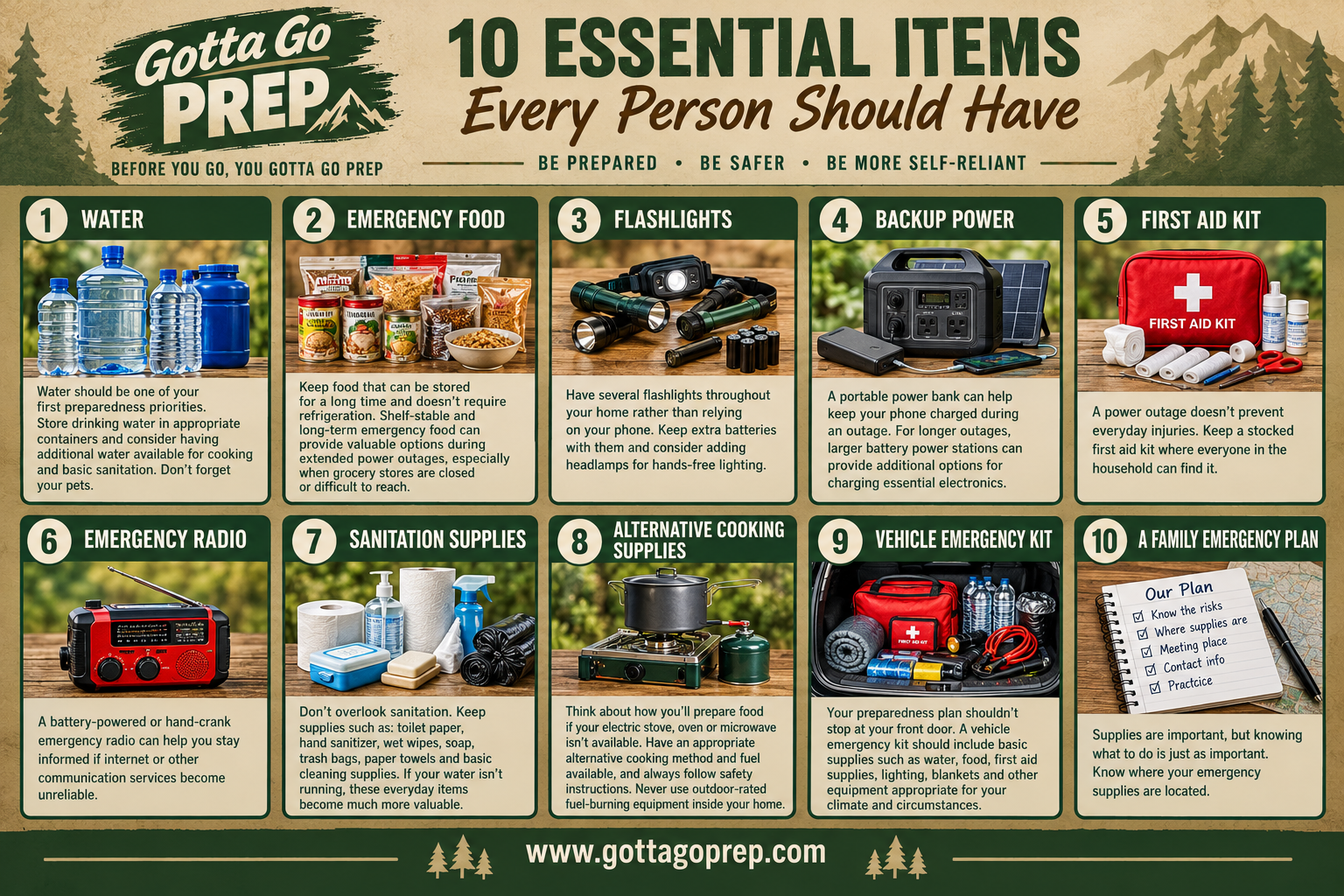
Water
Water should be one of your first preparedness priorities.
Store drinking water in appropriate containers and consider having additional water available for cooking and basic sanitation.
Don't forget your pets.
Emergency Food
Keep food that can be stored for a long time and doesn't require refrigeration.
Shelf-stable and long-term emergency food can provide valuable options during extended power outages, especially when grocery stores are closed or difficult to reach.
Flashlights
Have several flashlights throughout your home rather than relying on your phone.
Keep extra batteries with them and consider adding headlamps for hands-free lighting.
Backup Power
A portable power bank can help keep your phone charged during an outage.
For longer outages, larger battery power stations can provide additional options for charging essential electronics.
First Aid Kit
A power outage doesn't prevent everyday injuries.
Keep a stocked first aid kit where everyone in the household can find it.
Emergency Radio
A battery-powered or hand-crank emergency radio can help you stay informed if internet or other communication services become unreliable.
Sanitation Supplies
Don't overlook sanitation.
Keep supplies such as:
Toilet paper
Hand sanitizer
Wet wipes
Soap
Trash bags
Paper towels
Basic cleaning supplies
If your water isn't running, these everyday items become much more valuable.
Alternative Cooking Supplies
Think about how you'll prepare food if your electric stove, oven, or microwave isn't available.
Have an appropriate alternative cooking method and fuel available, and always follow safety instructions. Never use outdoor-rated fuel-burning equipment inside your home.
Vehicle Emergency Kit
Your preparedness plan shouldn't stop at your front door.
A vehicle emergency kit should include basic supplies such as water, food, first aid supplies, lighting, blankets, and other equipment appropriate for your climate and circumstances.
A Family Emergency Plan
Supplies are important, but knowing what to do is just as important.
Know where your emergency supplies are located.
Know how your household will communicate.
Know where you can get reliable emergency information.
Know what you will do if the outage lasts longer than expected.
Make sure everyone in the household understands the plan.
You Don't Have to Prepare Everything at Once
Preparedness doesn't have to mean spending hundreds or thousands of dollars overnight.
Start small.
Buy some water.
Put together a basic emergency food supply.
Get a couple of good flashlights.
Add batteries.
Build a first aid kit.
Get a power bank.
Then continue adding supplies as your budget allows.
The goal isn't perfection.
The goal is to be better prepared than you were yesterday.
Would You Be Ready for Forty-Eight Hours?
Take a few minutes and imagine this:
Tonight, the power goes out.
Then your water stops running.
Twelve hours pass.
Then 24.
Then 48.
Would you have enough water?
Would you have food that doesn't require refrigeration?
Could you light your home?
Could you charge your phone?
Could you handle basic sanitation?
Could you take care of your family and pets?
If the answer to some of those questions is "no," that's okay.
Now you know where to start.
Build Your Emergency Supplies Before You Need Them
A power outage can happen because of severe weather, equipment failure, accidents, or other unexpected circumstances.
You may only be without power for a few hours—or the situation could last much longer.
Being prepared gives you options.
Instead of rushing to the store after an outage begins, you can stay home and rely on the supplies you've already put aside.
At Gotta Go Prep, we provide practical survival and preparedness products to help you build your emergency supplies one step at a time.
From emergency food and water storage to first aid kits, lighting, power solutions, emergency bags, and other preparedness gear, we're here to help you get ready for the unexpected.
Don't wait until the power goes out to figure out what you need.
Visit www.gottagoprep.com and start preparing today.
Before you go, you Gotta Go Prep.
