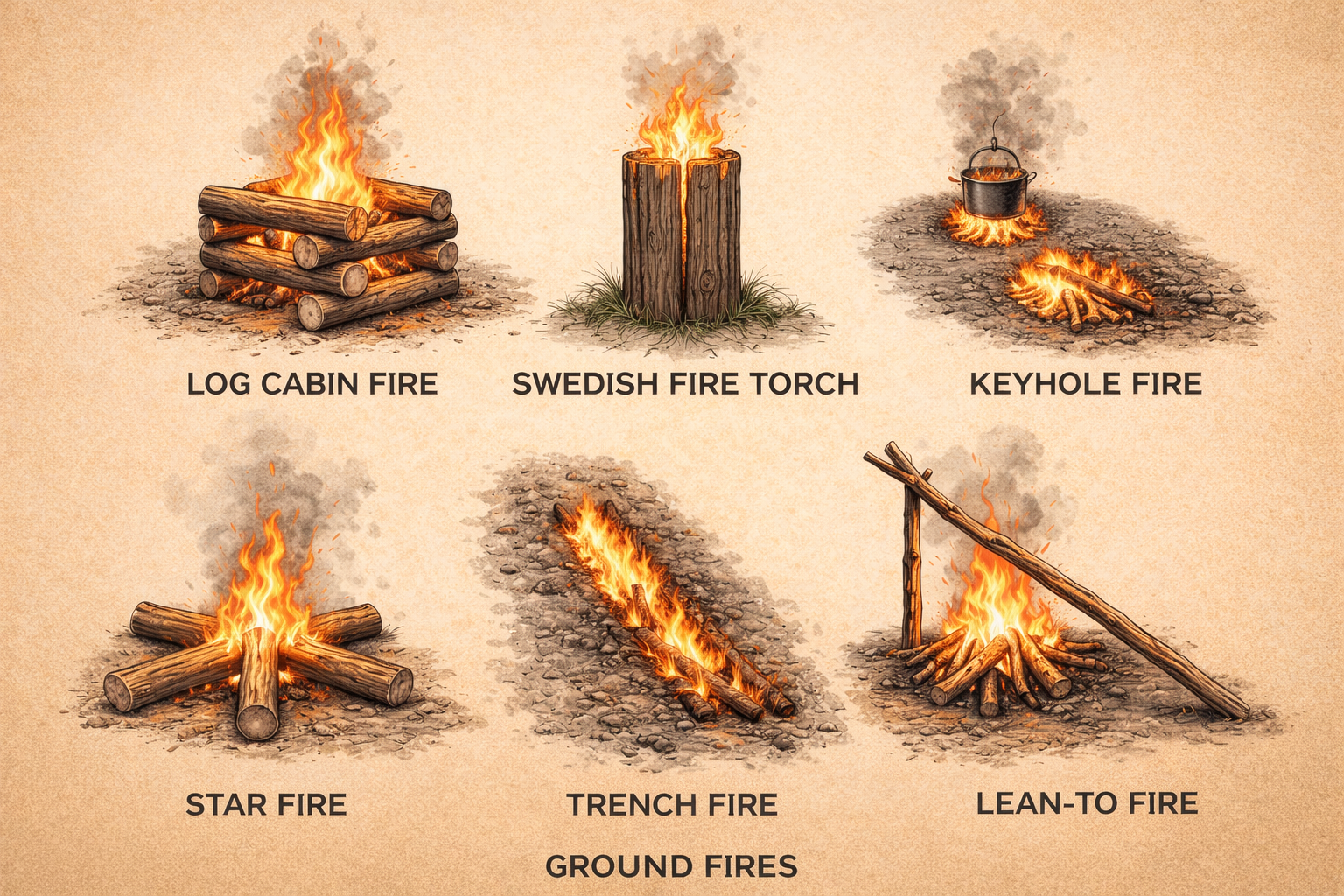
Building a fire isn’t just about striking a match and tossing on wood. The way you structure your fire determines how efficiently it burns, how much heat it produces, how long it lasts, and whether it’s suitable for cooking or simply staying warm. If you spend time camping, homesteading, or preparing for emergencies, knowing more than one fire lay is a practical outdoor survival skill worth mastering.
Here are six essential types of ground fires and when to use them.
1. Log Cabin Fire
The log cabin fire is one of the most dependable and versatile setups. To build it, stack larger logs in a square pattern, alternating directions like the corners of a cabin. Place tinder and kindling in the center.
This design allows for steady airflow, resulting in an even burn and a strong, consistent heat output. It also creates an excellent coal bed, making it ideal for campfire cooking. If you want a balanced fire that performs well in most situations, this is a solid choice.
2. Swedish Fire (Swedish Torch)
Often called a Swedish torch, this fire is built from a single upright log that has been split into sections. Tinder is placed in the center, and the log burns from the inside out.
Because the flame is concentrated and contained within the log itself, it functions almost like a natural stove. It’s efficient, compact, and leaves a minimal footprint. This setup works especially well when you need a stable surface for outdoor cooking with limited space.
3. Keyhole Fire
The keyhole fire is built using rocks or dirt to form a keyhole-shaped layout. The round portion contains the main fire, while the narrow extension improves airflow and provides space for feeding additional wood.
This design offers excellent heat control and organization, making it a favorite for camp cooking. The separation of flame and feeding area helps you manage fuel more efficiently while maintaining steady heat.
4. Star Fire
In a star fire, large logs are arranged like spokes on a wheel with their ends meeting in the center. As the center burns down, you gradually push the logs inward.
This is one of the most fuel-efficient fire lays available. Because only the inner ends burn at a time, it conserves wood and can maintain heat for long periods. It’s a practical choice for overnight warmth, survival situations, or when conserving firewood is important.
5. Trench Fire
A trench fire involves digging a narrow trench in the ground and building the fire inside it. The trench naturally channels airflow while shielding the flame from wind.
This setup is particularly useful in windy conditions or when you want to keep your fire lower profile. The surrounding earth helps contain heat and provides added stability.
6. Lean-To Fire
The lean-to fire is constructed by leaning small sticks at an angle against a larger log, forming a protective structure over your tinder.
The larger log acts as a windbreak and heat reflector, making this design especially useful in wet or windy weather. It’s one of the best options for getting a fire started in less-than-ideal outdoor conditions.
Why Knowing Different Fire Lays Matters
Understanding these six fire lays goes beyond basic camping knowledge. The right fire structure can conserve fuel, improve cooking performance, increase burn efficiency, and provide dependable warmth when weather conditions shift.
Whether you’re camping with family, homesteading off-grid, or building your outdoor survival skills, practicing different types of ground fires ensures you’re prepared no matter what the weather conditions are.
